
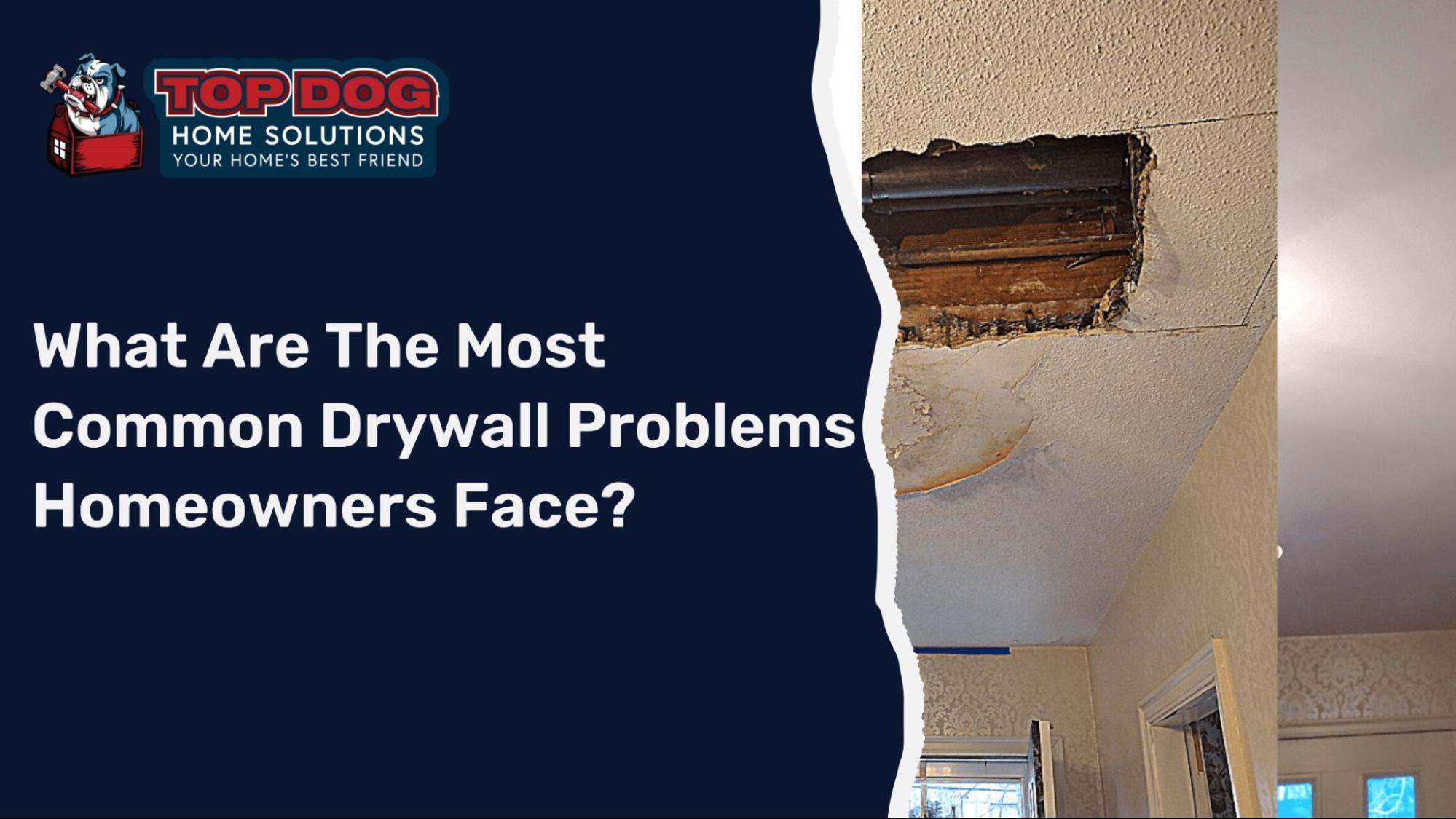
Drywall is one of the most widely used materials in modern homes, but even though it’s durable, it isn’t immune to wear and tear. It covers framing, protects wiring, creates smooth surfaces, and shapes the look of each room. Over time, many homeowners begin to see small issues that affect the appearance and comfort of their home. These problems may include cracks, dents, holes, stains, bulges, or other forms of damage. Drywall problems can appear in new homes and older homes. They often come from seasonal temperature changes, moisture, normal settling, and daily wear and tear. This guide explains the most common drywall issues homeowners face and how simple repairs keep your home in good shape. It uses clear language, helpful tips, and reliable sources so you can feel confident in each step. As a professional home improvement service, we regularly help homeowners identify and fix these issues before they lead to bigger structural problems.
Drywall damage occurs for several reasons. Some causes are environmental and others come from everyday use. Understanding the cause makes repair easier.
Typical causes include:
- Temperature changes
- Home settling
- Moisture from leaks
- Poor installation
- Everyday impact
- Structural movement
- Aging materials
Most Common Drywall Issues Homeowners Face
Drywall problems range from small cosmetic issues to damage that needs quick attention. Below are the issues most homeowners see during the life of their home. Understanding the most common drywall problems helps homeowners identify early signs of damage and allows them to seek timely drywall repair services before the issue becomes bigger and costlier.
1. Drywall Cracks
Cracks are one of the most common drywall issues homeowners face. They appear in ceilings, corners, hallways, near door frames, and around windows.
Common causes:
- Seasonal expansion and contraction
- Home settling
- Loose framing
- Poor taping or mudding
- High humidity
Small hairline cracks are usually cosmetic. Larger cracks may point to framing movement or moisture problems.
How to fix it:
- Clean out the crack
- Apply joint compound
- Add mesh tape if needed
- Sand and repaint
Keeping humidity balanced can reduce future cracks. The National Institute of Standards and Technology notes that humidity changes can make building materials shrink or expand.
2. Nail Pops
Nail pops occur when drywall fasteners push outward and create a raised bump. These bumps show through paint and create a visible flaw.
Why nail pops happen:
- Wood framing shrinks as it dries
- Temperature changes
- Loose fasteners
- Poor installation
How to repair a nail pop:
- Do not hammer it back
- Add a drywall screw above and below the pop
- Remove the popped nail or sink it deeper
- Apply joint compound
- Sand and paint
Nail pops are common and easy to repair.
3. Holes in Drywall
Holes appear from furniture damage, doorknobs, kids’ activities, or sudden impact. They range from tiny dents to large openings.
Types of holes:
Hole Size | Common Cause | Repair Solution |
Small dents | Furniture, toys | Spackle and sand |
Medium holes | Doorknobs, impact | Patch with mesh |
Large holes | Strong force or removal of fixtures | Full panel replacement |
How to fix holes:
- For small dents: spackle and sand
- For medium holes: mesh patch and compound
- For large holes: cut out and replace a full section
Preventing impact damage by adding door stoppers can help avoid future repairs.
4. Water Stains and Moisture Damage
Water stains are one of the most serious drywall issues homeowners face. They often show up as brown rings on ceilings or walls.
Causes of moisture damage:
- Plumbing leaks
- Roof leaks
- Condensation
- HVAC problems
- High indoor humidity
The Environmental Protection Agency states that indoor moisture problems can lead to mold growth in as little as 24 to 48 hours.
Signs of serious moisture damage:
- Soft or sagging drywall
- Musty odor
- Peeling paint
- Discoloration
- Visible mold
How to fix it:
- Stop the source of water
- Remove damaged drywall
- Dry the area fully
- Install new drywall
- Paint with primer and finish
Moisture damage should be handled quickly to avoid mold.
5. Drywall Joint Separation
Joint separation happens when taped seams begin to move apart. This creates long, visible lines across ceilings or walls.
Why joints separate:
- Seasonal movement
- Poor taping work
- Inadequate mud application
- Temperature changes
- Roof or framing movement
How to fix it:
- Remove loose tape
- Apply mesh or paper tape correctly
- Add joint compound in layers
- Sand and paint evenly
This type of repair is best done by a professional for a smooth finish.
6. Sagging Drywall
Sagging drywall usually occurs on ceilings and may signal a larger issue.
Common causes:
- Too much moisture
- Poor fastener spacing
- Heavy insulation on top
- Improper panel thickness
Signs of sagging drywall:
- Bowed appearance
- Visible screws pulling out
- Soft feel when pressed
Fixing sagging drywall:
- Add screws to tighten the panel
- Replace damaged sections
- Address moisture or insulation issues
Sagging ceilings often need expert attention.
7. Textured Surface Problems
Homes with textured ceilings or walls may face peeling, cracking, or uneven surfaces.
Causes:
- Moisture
- Poor application
- Aging texture
- Water damage
- Paint buildup
How to fix it:
- Remove loose texture
- Apply new texture evenly
- Prime and paint
Matching texture can be challenging without experience.
8. Corner Bead Damage
Corner beads reinforce the edges of walls. When damaged, they crack or dent easily.
Causes:
- Impact from furniture
- Poor installation
- Loose fasteners
- Humidity
- Aging materials
How to fix it:
- Remove damaged bead
- Replace with new metal or vinyl bead
- Apply compound and smooth
- Sand and paint
9. Drywall Bubbling or Blistering
Blisters form when drywall tape lifts or when joint compound traps moisture.
Causes:
- Moisture
- Poor taping
- Water leaks
- Inconsistent mud application
Fixing bubbles:
- Remove loose tape
- Dry the area
- Apply fresh tape and compound
- Sand and paint
Bubbles are a sign of improper installation or moisture.
10. Crumbling or Soft Drywall
Drywall that feels soft or crumbly usually has been exposed to moisture for a long time.
Causes:
- Long term leaks
- Poor ventilation
- High humidity
- Foundation moisture
How to fix it:
- Remove damaged drywall
- Repair leak
- Install new panels
- Prime and paint
Most Common Drywall Issues and Their Difficulty Level
Drywall Problem | Difficulty | Homeowner Friendly? | Need a Professional? |
Hairline cracks | Easy | Yes | No |
Nail pops | Easy | Yes | No |
Small dents | Easy | Yes | No |
Medium holes | Medium | Yes | No |
Large holes | Hard | No | Yes |
Water damage | Hard | No | Yes |
Sagging drywall | Hard | No | Yes |
Joint separation | Medium | Sometimes | Yes |
Mold damage | Hard | No | Yes |
Texture matching | Medium | Sometimes | Yes |
How to Prevent Drywall Problems?
Many drywall issues are preventable with simple steps.
-
1.Keep humidity balanced
The U.S. Department of Energy states that maintaining stable humidity helps protect building materials from movement and damage.
-
2.Fix leaks early
Water damage spreads fast and weakens drywall.
-
3.Use door stoppers
This prevents doorknob holes.
-
4.Seal windows and doors
This reduces movement caused by temperature changes.
-
5. Avoid slamming doors
This helps reduce cracks around frames.
-
6. Use proper ventilation
Vent fans in bathrooms and kitchens prevent moisture buildup.
When to Call a Professional?
Some drywall issues are simple. Others require expert skill. Call a professional when:
- Cracks keep coming back
- There is mold or moisture damage
- You see sagging ceilings
- Large holes need replacing
- Textures need matching
- Joints keep separating
- There are signs of structural movement
A trained team ensures safe, smooth, long lasting results.
How Drywall Repairs Improve Your Home?
Cracks in Drywall repairs do more than fix visual flaws. They help:
- Improve home comfort
- Reduce moisture risk
- Enhance room appearance
- Increase property value
- Create a healthier living space
- Ensure safety for your family
Drywall is an important part of your home’s structure and should be maintained with care.
Frequently Asked Questions (FAQs)
What causes cracks in drywall?
Cracks come from home settling, humidity changes, and normal movement in building materials.
How do I know if drywall damage is serious?
Soft drywall, sagging ceilings, large cracks, and water stains are signs of more serious issues.
Can I paint over drywall cracks?
Painting over cracks will not fix them. The crack will return. Repair it first with compound and tape.
Is drywall mold dangerous?
Yes. Mold can affect indoor air quality. Remove and replace mold damaged drywall.
How long does drywall repair take?
Small repairs take one day. Larger repairs may take several days due to drying time.
Can drywall be repaired instead of replaced?
Yes, most small and medium drywall problems can be repaired. Extensive moisture or mold damage often requires replacement.
Conclusion
Drywall issues are common in every home. Many problems are simple to repair when handled early. Cracks, nail pops, dents, holes, and small flaws can be fixed with basic tools. Larger issues such as water damage, sagging ceilings, or joint separation need professional care to keep your home safe and comfortable. Taking action early helps maintain your home’s value and appearance. For trusted help with drywall repair and other home improvements, reach out to Top Dog Home Solutions.