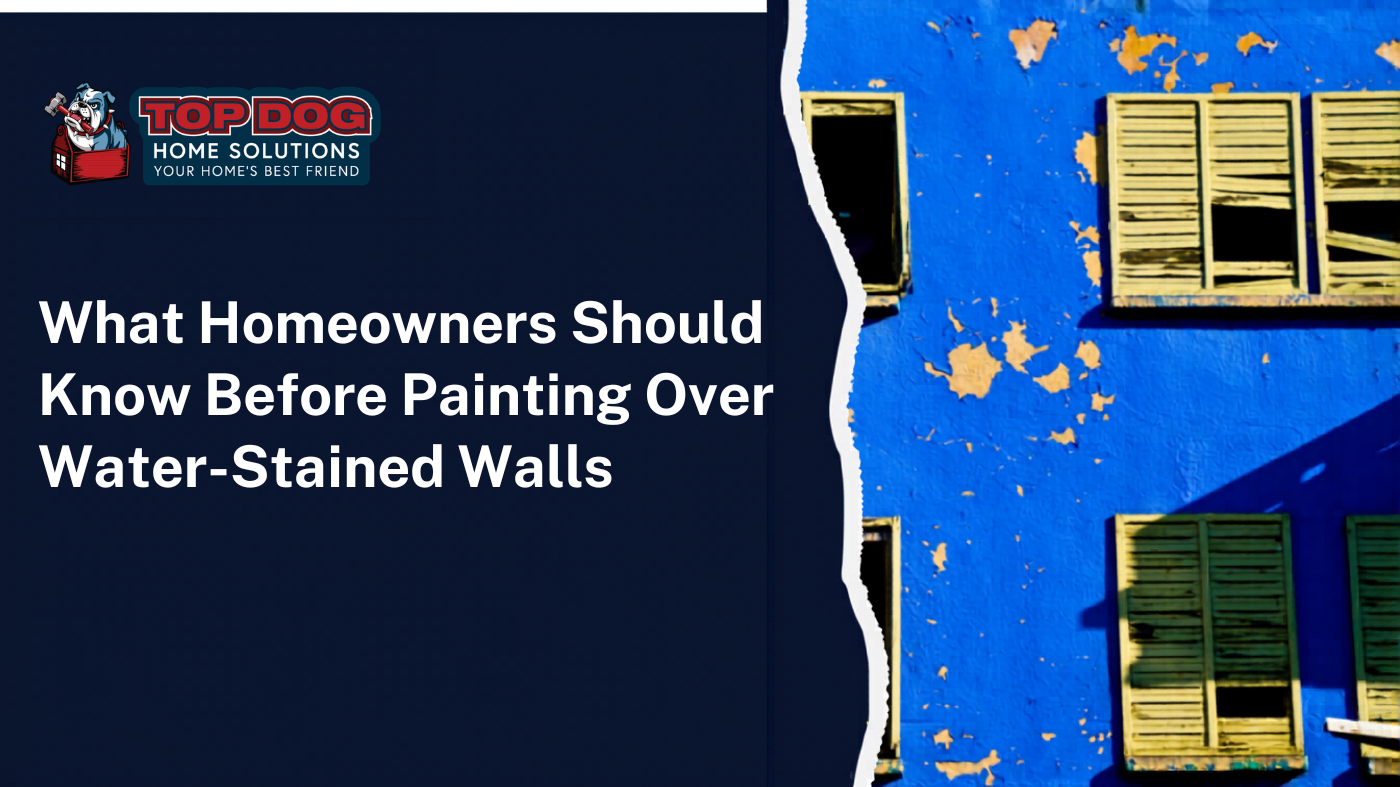
Water stains on walls are easy to notice and hard to ignore. Many homeowners want to cover the mark with a fresh coat of paint and move on. But that quick fix often fails. If the wall is still damp, if the leak is still active, or if mold has started to grow, the stain usually comes back. In some cases, the wall itself may already be damaged. Before you repaint, you need to know what caused the stain, whether the area is fully dry, and whether the surface is still sound. For homeowners who want a clean finish that lasts, this is where good prep and the right painting services matter most. A water stain is not just a paint problem. It is often a warning sign of a plumbing leak, roof issue, bathroom moisture problem, or hidden drywall damage. EPA says the key to mold control is moisture control, and water-damaged areas should be dried within 24 to 48 hours to help prevent mold growth. FEMA also notes that water intrusion can move through wall systems, damaging interior finishes.
This topic is a strong fit for Top Dog Home Solutions because the company serves Central Indiana homeowners, property managers, and real estate professionals who need reliable repair, painting, drywall, plumbing, and maintenance support. The company helps homeowners solve real problems without confusion.
Why is painting over a water stain too soon a mistake?
Paint can hide a mark for a short time. It cannot explain why the mark appeared.
If you paint over a water-stained wall before fixing the source, three things often happen:
- The stain bleeds through the new paint
- The finish peels or bubbles
- Mold and moisture stay trapped behind the surface
EPA says if mold is a problem in your home, you should clean it up promptly and fix the water problem. The agency also says it is important to dry water-damaged areas within 24 to 48 hours to help prevent mold growth.
That is why the first job is not painting. The first job is finding the cause.
What usually causes water-stained walls
A water stain can come from several places. Some are obvious. Others are hidden for weeks.
Common causes include:
- Roof leaks near exterior walls or upper floors
- Leaking pipes inside walls
- Bathroom moisture from showers, tubs, or vanities
- Failed caulk around windows
- Clogged gutters sending water into the walls
- Old drywall that absorbed water from a past leak
FEMA says water intrusion often occurs where roof coverings, soffits, exterior wall coverings, and window or door openings are damaged. Once water gets in, it can saturate insulation, move into wall systems, and damage finishes inside the home.
That is why homeowners should never assume the stain is old and harmless.
What to check before you paint
1. Make sure the leak is fully fixed
This sounds simple, but it is the most important step. If the source is still active, the stain will return.
Ask yourself:
- Did the stain appear after rain
- Is it near a bathroom or kitchen
- Is it under a window
- Is it below a second-floor bathroom
- Has the stain grown over time
- Does the wall still feel cool or damp
If the answer to any of these is yes, investigate before repainting
2. Check for mold or mildew
Mold is a real concern after water damage. Not every stain means mold, but you should look closely.
Signs to watch for:
- Musty smell
- Dark spotting around the stain
- Fuzzy or powdery growth
- Recurring discoloration after cleaning
- Recent moisture that lasted more than a day or two
EPA says mold problems should be cleaned up promptly, and the water problem must be fixed first.
If the affected area is large or if you suspect a hidden problem inside the wall cavity, do not just paint over it.
3. Check the drywall condition
A water stain may be the least serious part of the problem. Drywall can soften, swell, sag, or crumble after exposure to moisture.
Look for:
- Bubbling paint
- Soft spots
- Flaking joint compound
- Sagging tape seams
- Nail pops
- Crumbling edges
4. Make sure the wall is truly dry
A wall may look dry before it actually is dry. Painting over damp drywall can trap moisture and ruin the finish.
A few signs that the wall may not be ready:
- Cool or damp feel
- Dark edges around the stain
- Peeling old paint
- Soft paper face on drywall
- Strong musty smell
EPA guidance is clear that quick drying matters because lingering moisture raises mold risk.
Can you paint over a water stain if the leak is fixed?
Yes, but only after the wall is dry, clean, stable, and sealed with the right primer.
Regular paint alone is usually not enough. Water stains can bleed through standard wall paint. That is why many pros use a stain-blocking primer before the finish coat.
The right order looks like this:
- Fix the leak
- Dry the area fully
- Clean the surface
- Repair damaged drywall if needed
- Sand rough spots
- Prime with a stain-blocking primer
- Repaint the full section for a smooth look
Skipping the primer step is one of the biggest reasons water stains return through fresh paint.
What kind of primer works best on water-stained walls?
Not all primers perform the same way. A stain-blocking primer is usually the safest choice.
Good options often include:
- Oil-based stain blocking primer
- Shellac-based stain blocking primer
- High-quality bonding primer rated for water stains
The best product depends on the size of the stain, the surface type, and whether any odor is present. If the stain is heavy, a simple paint-and-primer combo is usually not enough.
When is painting not enough?
Sometimes painting is the final step. Sometimes it should not happen yet.
You may need to repair first if:
- Drywall is soft or swollen
- Trim is rotten
- The stain keeps growing
- The area smells musty
- Paint bubbles keep returning
- The source of water is still unclear
Quick homeowner checklist before repainting
Use this checklist before opening a can of paint.
Question | Yes or No | Why It Matters |
Do you know what caused the stain | You must fix the source first | |
Has the leak been repaired | The stain will return if it has not | |
Is the wall fully dry | Trapped moisture can cause more damage | |
Is there any mold smell or spotting | Mold must be handled before paint | |
Is the drywall firm and smooth | Soft drywall may need replacement | |
Do you have a stain-blocking primer | Regular paint may not cover the mark | |
Are you repainting the full area | Full wall coverage usually looks better |
You may need to repair first if:
- Drywall is soft or swollen
- Trim is rotten
- The stain keeps growing
- The area smells musty
- Paint bubbles keep returning
- The source of water is still unclear
What the data says
A few numbers show why water stains deserve fast attention.
Stat | What It Means for Homeowners |
Water-damaged areas should be dried within 24 to 48 hours | Fast drying helps reduce mold risk |
About 1 in 67 insured homes has a property damage claim caused by water damage or freezing | Water damage is a common homeowner issue |
About 1 in 36 insured homes has a property damage claim related to wind or hail | Some wall stains begin after storm-driven water entry |
Water intrusion can saturate insulation and damage interior wall systems and finishes | A stain may signal deeper wall damage |
You may need to repair first if:
- Drywall is soft or swollen
- Trim is rotten
- The stain keeps growing
- The area smells musty
- Paint bubbles keep returning
- The source of water is still unclear
Best practices for a lasting paint job
Clean the stain area first
Remove loose paint, dirt, or chalky residue. If the surface shows signs of mildew, clean it thoroughly and let it dry completely before proceeding to the next step.
Repair the wall surface
Patch holes, replace soft drywall sections, reset loose tape, and sand rough areas smooth. A clean flat surface helps the primer bond well.
Prime the full affected area
Spot priming can work on a very small mark, but larger stains often require a broader section to be primed to avoid uneven coverage.
Repaint for a uniform finish
For the best look, paint the whole wall from corner to corner when possible. Touch-ups on stained areas can leave obvious color or sheen differences.
Mistakes homeowners should avoid
Painting before the wall is dry
This traps moisture and raises the chance of bubbling, peeling, and mold.
Using regular latex paint only
Standard paint often fails to block stain bleed-through.
Ignoring the source of the stain
If the cause is still active, the new paint job will not last.
Covering mold without cleanup
EPA says moisture control and mold cleanup come first. Paint is not mold treatment.
Repainting damaged drywall
If the wall is soft, swollen, or breaking apart, repair comes before finishing work.
Frequently Asked Questions
Can I just paint over a water stain on a wall?
Not right away. First, fix the water source, dry the area thoroughly, check for mold, and apply a stain-blocking primer. If you skip those steps, the stain often comes back through the new paint. EPA says moisture control is the key to mold control.
Will water stains bleed through paint?
Yes. In many cases, they do. Standard paint may hide the mark at first, but water stains often reappear unless you use the right primer and the wall is fully dry.
How do I know if a water-stained wall has mold?
Look for a musty smell, dark spotting, repeated discoloration, or recent moisture that stayed in place for more than a day or two. EPA says mold should be cleaned up promptly, and the water problem should be fixed first.
Do I need primer before painting over a water stain?
Usually, yes. A stain-blocking primer helps stop discoloration from bleeding through the new paint. It also improves the finish and helps the repaired area blend in better.
When should I replace drywall instead of repainting it?
Replace or repair drywall if it feels soft, swollen, crumbly, sagging, or damaged around seams. If the wall surface is no longer sound, paint alone will not solve the problem.
Is a water stain always a plumbing problem?
No. It can also come from roof leaks, failed window seals, exterior water intrusion, bathroom moisture, or poor ventilation. FEMA notes that water can enter around roof coverings, exterior wall coverings, and window or door openings.
Final Thoughts
Painting over a water-stained wall should always be the last step, not the first one. When you take the time to find the cause, dry the area, check for mold, repair damaged drywall, and prime the surface properly, your paint job lasts longer, and your home stays healthier. That is the smart way to protect both the look of your walls and the structure behind them.
If you want help fixing the cause, repairing the wall, and getting a clean, lasting finish, reach out to Top Dog Home Solutions.